

How to introduce Machine Learning into your hospital
Machine learning can be applied to hospital operational Decision Support problems without an advanced math degree. This article illustrates practical ML applications in healthcare analytics, including finding missing diagnostic imaging records.

January 7, 2021
X min read
How to introduce Machine Learning into your hospital
Machine learning (ML) and Artificial Intelligence (AI) have consistently been the topic of healthcare articles citing advanced applications such as identifying malignant tumors from radiology images or automatically diagnosing patients. There is a very wide spectrum of uses for machine learning, many of which can be applied towards less captivating hospital operational purposes.
In this article, I hope to illustrate that there are many hospital Decision Support (DS) problems that can be best solved using ML and that you do not require an advanced degree in mathematics to take advantage of the technology.
Decision support in hospital environments
Anecdotally, we've seen that Decision Support (DS) teams mostly use a mixture of parameterized reports, ad-hoc database queries, Excel, and interactive data visualization tools (Qlik, Tableau, PowerBI) to support analytical uses. Many of these approaches are resource-intensive, inflexible, or leave it to end users to decipher and extract insight from the data.
With so much attention paid to interactive "self-serve" data visualization software, there is often a significant gap between the tools provided to users and what users actually need. Sometimes unit managers just need direct answers to targeted questions such as "Which of my patients are at risk for readmission?" and "What is my anticipated nursing workload for next week?". These valuable questions are not easily answered by flashy dashboards that just present raw data in more digestible formats.
What is Machine Learning?
To understand the basic concept, let's look at a simple example. Let's say that you have the following visit counts over the past 20 days and you'd like to predict what the next week will look like. This relationship between visit count and time looks linear, meaning it's following a straight line into the future.
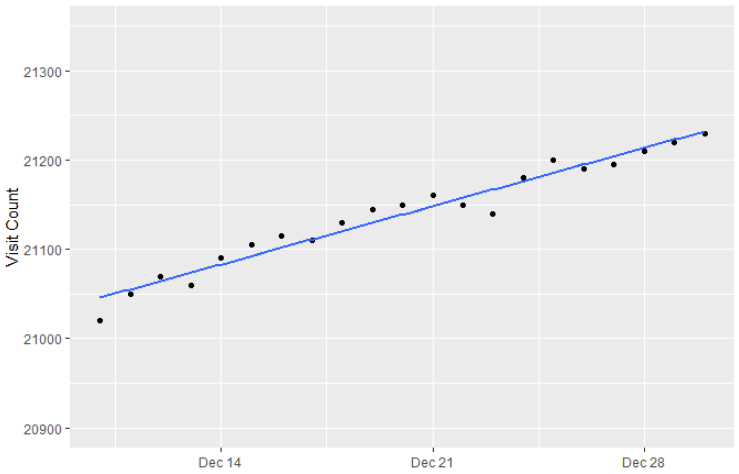
What Machine Learning does in this trivial example is to provide a best estimate of the line's slope (and intercept) based on the data available. Machine learning is very good at finding the right parameters for a model of your choosing that best represents the problem at hand.
A practical example
Let's look at a specific application of ML in our DQA software. Whenever Diagnostic Imaging (DI) is used on a hospital visit, it needs to be recorded on the patient record. When tasked with finding these discrepancies, a common approach for a DS analyst would be to write a SQL database query to compare data from the DI system against the coded medical record data. The problem is that codes from the DI system are different from the standardized intervention codes (CCI in Canada) found on medical abstracts.
Using Machine Learning to find missing DI exams
Luckily, there are many ML algorithms that are very good at detecting whether something is likely present or not (binary classification). You just need to "train" the algorithm using historical records that list all DI system and resulting CCI codes for each visit.
This type of analysis takes less than 100 lines of code, none of which is particularly complicated. We tested a wide variety of binary classification algorithms including Logistic Regression, Support Vector classifiers, and Decision Tree variations. All were very accurate (about 300% more accurate than our mapping approach) and took very little time to develop.
How do I get started?
Professional data scientists are very expensive and out of reach for most DS departments but many hospital analysts can add practical ML techniques to their toolboxes. I recommend the book Machine Learning with R which provides a comprehensive overview of most ML algorithm categories along with practice examples in R, a popular statistical and ML software package that is completely free.
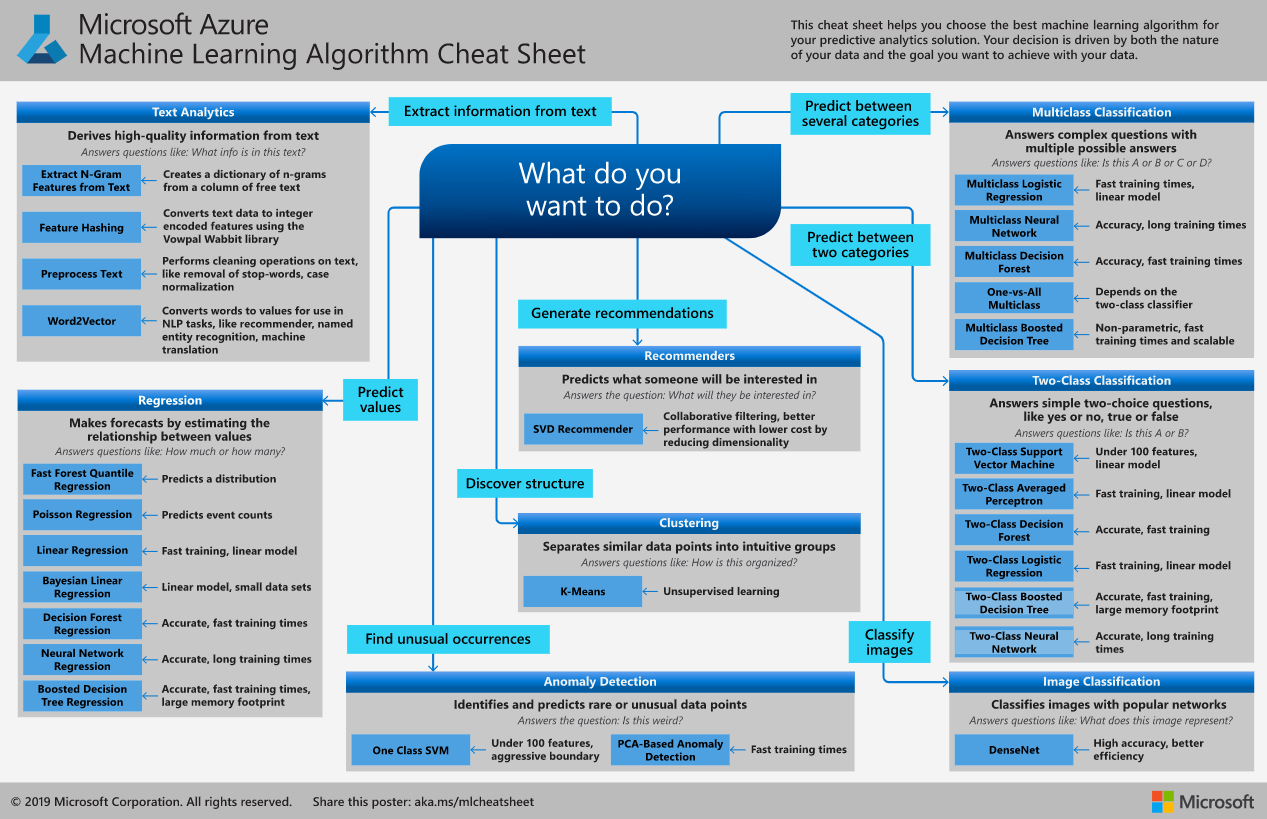
With just a fundamental understanding of ML and evaluating model performance, analysts can begin getting value from these algorithms. Microsoft SQL Server now has integrated R and Python support, and Microsoft has allocated significant resources towards making ML more approachable for data analysts and developers.
Summary
A rudimentary, practical understanding of Machine Learning may transform the way that you approach solving analytical problems. It has made our software far more accurate and easier to maintain.
It may extend your limits in answering complex questions, some of which may have been thought unsolvable. It's not all hype and it doesn't exclusively belong in the domain of experts.