

Using data to reduce preventable harm
3terra's hospital harm module helps hospitals identify and reduce preventable harm using coded inpatient data. Approximately 1 in every 18 hospital stays in Canada involve at least one occurrence of preventable harm.

February 13, 2018
X min read
Using data to reduce preventable harm
We've recently released our new hospital harm module and have begun working with hospitals to refine the tool and get feedback to guide future functionality. Here is some background and insight into our initial findings.
Background
According to the Canadian Patient Safety Institute (CPSI), approximately 1 in every 18 hospital stays in Canada involve at least one occurrence of preventable harm, resulting in an average of four extra patient days per occurrence. The World Health Organization estimates between 20% to 40% of all health spending is wasted due to poor-quality care.
This topic has received increased interest of late because of media attention and the fact that patient safety data is now tracked and published by the CPSI and the Canadian Institution of Health Information (CIHI).
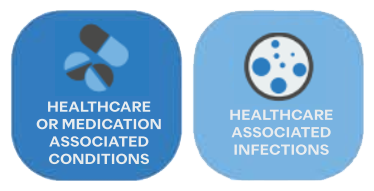
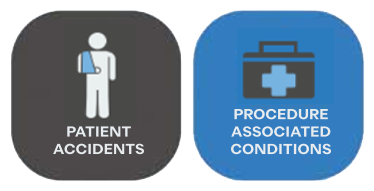
The CPSI has defined 31 separate clinical harm groups across 4 major categories:
Why we focused on harm analysis and our approach
Currently, harm data is released to hospitals on an annual basis and there are no self-serve reporting tools. Hospital executives are often frustrated that, while the data indicates there is room for improvement, they don't have the details required to implement an effective harm reduction strategy. Physicians often push back, citing issues of inadequate risk adjustment and data quality.
In addition to the patient safety and experience considerations, hospital revenue is also negatively affected by harm. If a patient stays in hospital longer when harm occurs (an average of 4 days based on the CPSI/CIHI studies), the hospital incurs costs for those additional days. However, there is typically no extra case weight allocated for that stay to increase the hospital funding allocation (HBAM) and compensate for the additional cost of care.
Our primary goal was to provide a comprehensive, yet easy-to-use, analytical framework that supplements the work done by CPSI and CIHI. By reusing the abstracted inpatient data (DAD) already regularly imported into our software at our partner hospitals across the province, we were able to automatically identify instances of harm, calculate the risk-adjusted harm values, and provide detailed analytics based on many factors including clinical service, patient group (CMG/HIG), unit and physician.
What we found
Working with our partner hospitals, we found that in addition to pointing them toward existing, internally identified problem areas the analytics also highlighted issues that were not previously known. For the areas that administrators and clinical leaders were already aware of, the tool provided a more nuanced understanding of their performance.
Hospitals were also surprised to learn about the number of hospital harm cases that had a very low likelihood of harm at admission (a low Charlson score), which has led to targeted reviews of documentation and coding practices in specific areas.
1. Risk calculations need to evolve
Tracking risk-adjusted harm rates is crucial because higher complexity patients are at higher risk of harm and this variability must be factored in to normalize analysis over time.
2. Timeliness is very important
It is very challenging to improve performance if you are only able to monitor your results on an annual basis. With the timelier data that we work with, hospitals may catch issues before they cause further harm.
3. Clinician-level analysis is valuable but sensitive
There are sensitive issues associated with the perception of assigning blame to specific physicians. We have been working on a physician scorecard that we think is extremely valuable, but has been met with some trepidation.
4. Unit-level reporting is valuable
Unit-based incident reporting and quality improvement targeting has added greater value compared to traditional hospital-wide or national reporting systems.
5. The underlying data is not complete
Under-coding patient abstracts is a large issue, particularly for smaller hospitals with limited coding and Decision Support resources.
A simple, yet effective, starting point provides the best chance at long term success and maturity.
While the CPSI methodology to identify harm is not perfect, it certainly acts as an effective "Geiger counter" for detecting specific areas in the hospital that require attention. The current framework is a step in the right direction for patient safety and can form a solid foundation for a hospital.